



You have a room that needs to sleep people. You're deciding between a sofa bed and a Murphy bed. The internet will tell you it depends on your lifestyle and budget and preferences. That's not wrong, but it's not particularly useful either.
Here's a more direct way to understand the decision.
A sofa bed is seating first. The bed is a secondary function built into a piece of furniture whose primary job is to be a couch. That compromise shapes everything about how it performs as a bed — the mattress thickness, the support structure, the sleep experience. It never disappears. The room it lives in is always a room with a couch in it, which means the room's identity is more or less fixed.
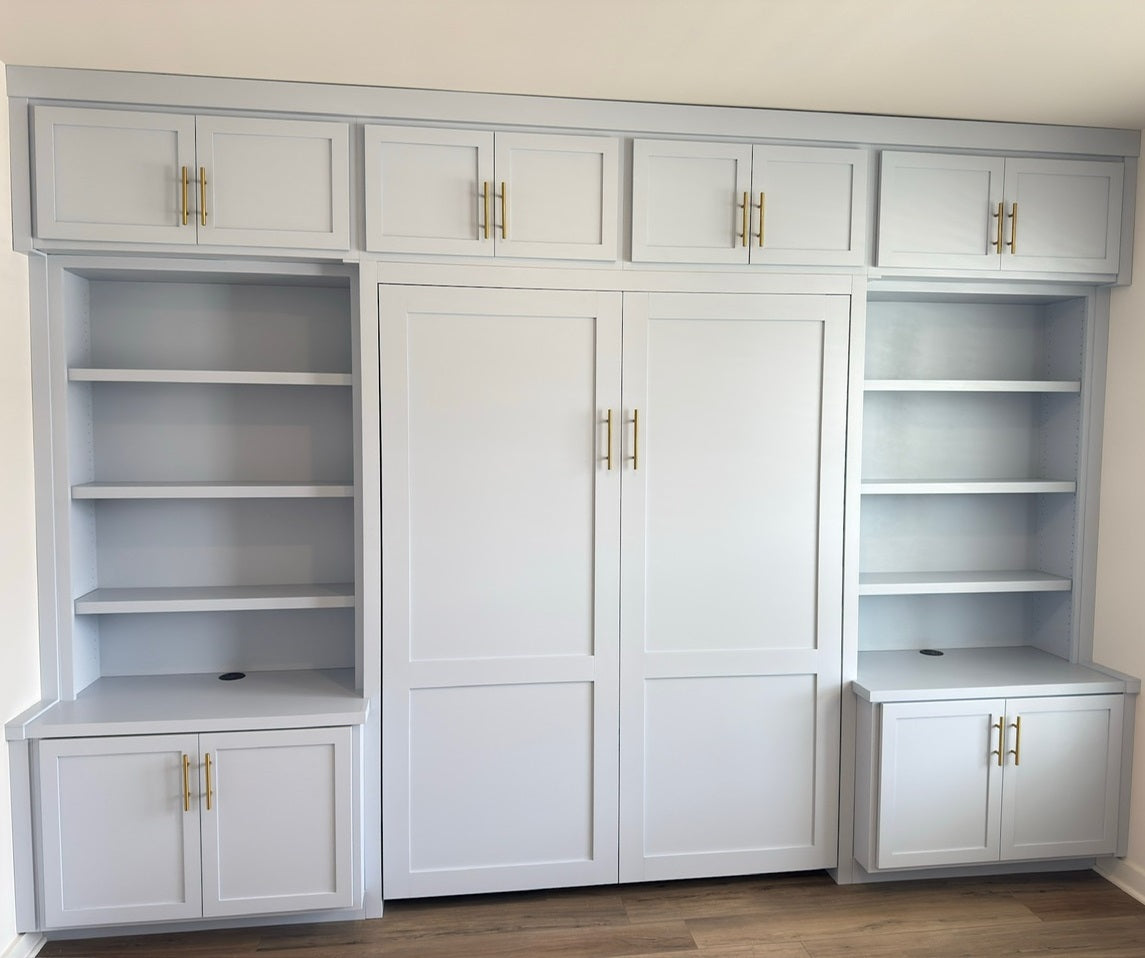
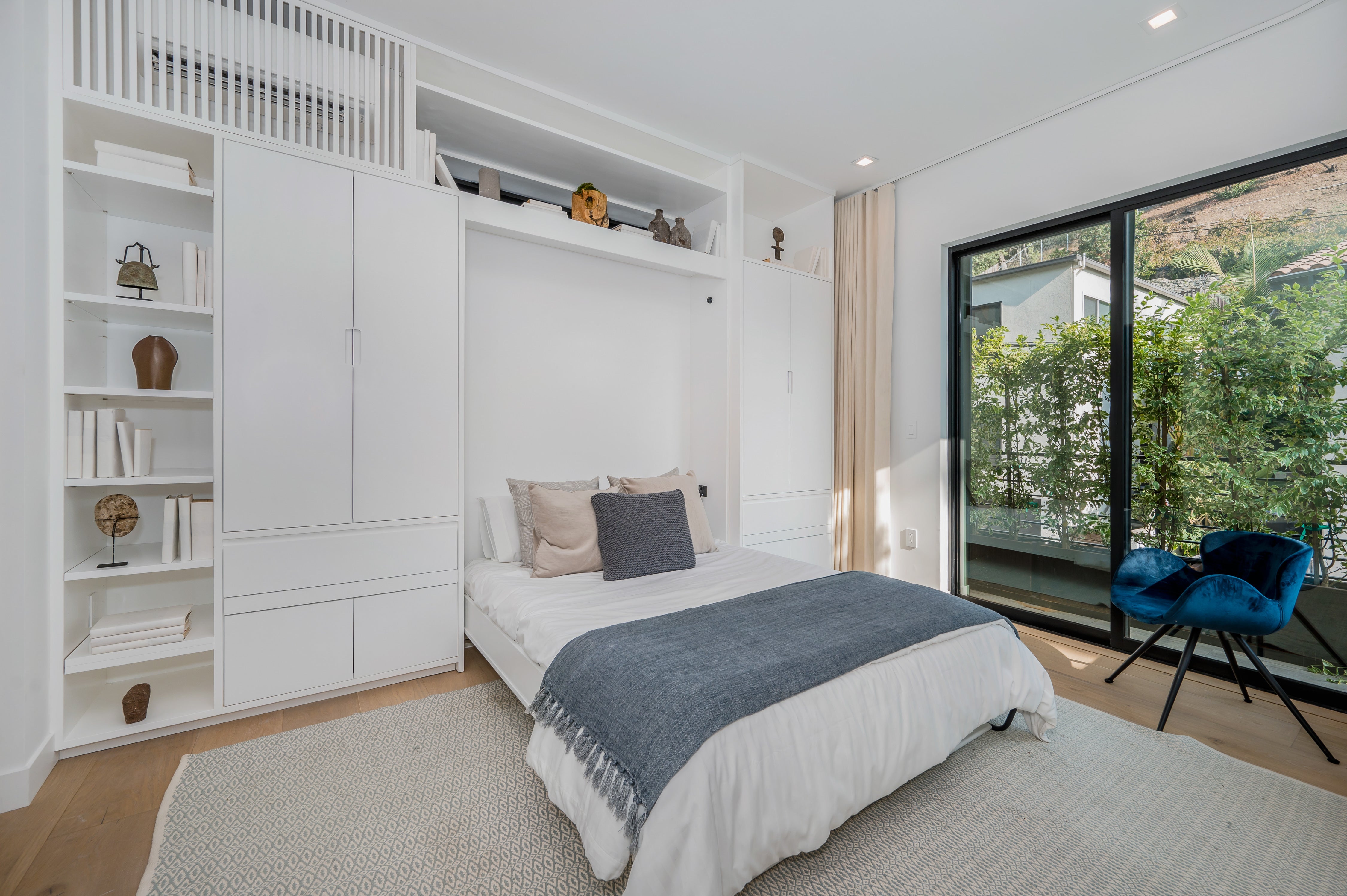
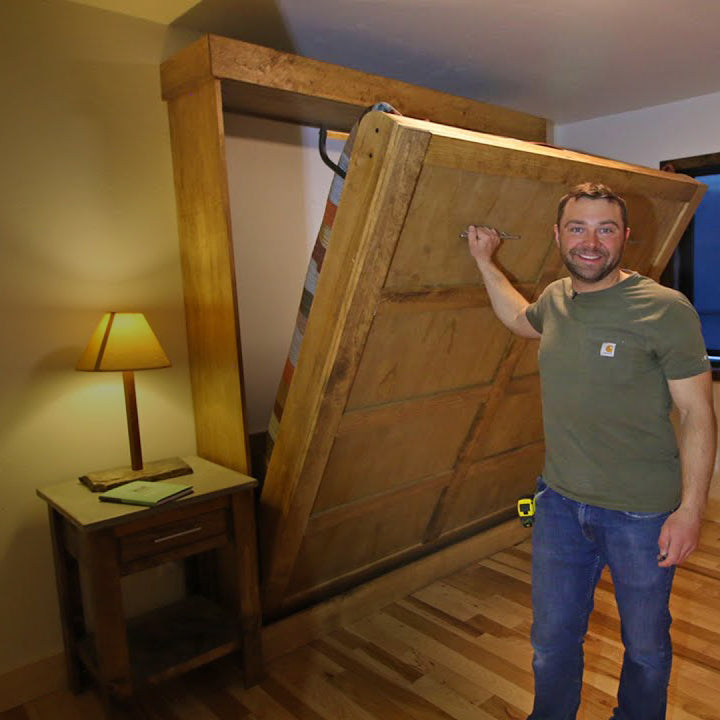
A Murphy bed is a bed. It uses a real mattress with no compromise. And when you don't need it, it folds away completely, eliminating itself from the equation — leaving the room free to be an office, a gym, a playroom, etc, whatever you actually need it to be that week. It doesn't turn into something else. It just stops being present.
That's the core distinction. Everything else in this comparison flows from it.
The Fundamental Trade-Off
A sofa bed asks you to accept a compromise in exchange for convenience. You get permanent seating and occasional sleeping capacity in a single piece of moveable furniture that requires no installation and goes wherever you go. The trade-off is that the bed component is always secondary — designed to fold inside a sofa frame, which constrains the mattress, the support structure, and ultimately the sleep quality.
A Murphy bed bypasses that trade-off. The whole mechanism is built for sleeping — a full-depth mattress, proper support, nothing folded in half or packed around a metal frame. The convenience you give up is portability. A Murphy bed is a permanent fixture to the room. It anchors to the wall, it stays when you move, and it requires time to build and install. What you get in return is a bed that performs like a bed and a room that performs as whatever kind of room you need.
Neither is the wrong answer in the abstract. It all depends on what you need. They're different solutions solving different problems, so defining what problem you actually have before you spend the money is important.
Sleep Quality: Where the Gap Lives
This is the most important category, and the most honest one to address directly.
Murphy beds use a standard mattress — the same mattress you'd find on a conventional bed frame. Create-A-Bed's mechanism supports mattresses up to 12 inches thick, which means memory foam, hybrid, or innerspring at whatever quality level you choose. There's no structural need to compromise. The bed is a bed.
Sofa bed mattresses are constrained by the design of the sofa. The mattress has to fold up to fit inside the frame, which limits thickness and materials. The fold point is also where the metal support structure sits. It's a geometry problem baked into sofa beds everywhere.
The premium end of the sofa bed market has made genuine progress here. Some models at $3,000 and above use gel memory foam layers and no-bar or reduced-bar mechanisms that meaningfully improve the sleep experience. If you're spending serious money on a sofa bed from a quality manufacturer, it's fair to say the sleep experience has improved substantially from what the category used to offer.
But it’s still only trying to equal the experience of a dedicated bed, and the comparison is even more stark in sleep quality at equivalent price points. A $1,500 Murphy bed build using a Create-A-Bed mechanism and a quality mattress outperforms a $1,500 sofa bed on sleep quality because it uses a real, full-depth mattress with no fold constraint.
|
The straightforward version: At any given price point, a Murphy bed with a quality mattress will deliver a better sleep experience than a sofa bed at the same price. The sofa bed is spending part of that budget on being a sofa. |
What Happens to the Room
This is where the Murphy bed's other core advantage lives, and it's a significant one.
A sofa bed doesn't disappear. Even when no one is sleeping on it, it occupies quite a bit of space in smaller rooms as a permanent piece of furniture. The room is always a room with a sofa in it. That shapes how the space can be arranged, what it can be used for, and how it reads visually. You're always working around it.
A Murphy bed, closed in its cabinet, unobtrusively occupies roughly 9 to 10 square feet against the wall — about 16 inches of depth. The rest of the floor is yours. A queen Murphy bed returns roughly 33 square feet of usable floor space every morning. In a 10-by-12 spare room, that's the difference between a room that functions fully during the day as an office and a room with a couch pushed against one wall.
There's an aesthetic dimension to this as well. A Murphy bed closed in its cabinet is taken in at a glance as furniture — a wardrobe, built-in shelving, cabinetry, or the like. The room doesn't look like a bedroom when the bed is raised. On the other hand, a sofa bed always looks like a couch, which means the room always has an aspect of a living room, regardless of what else you've put in it. For rooms that need to genuinely shift between uses, the Murphy bed is an option that fully completes the transformation in both directions.
|
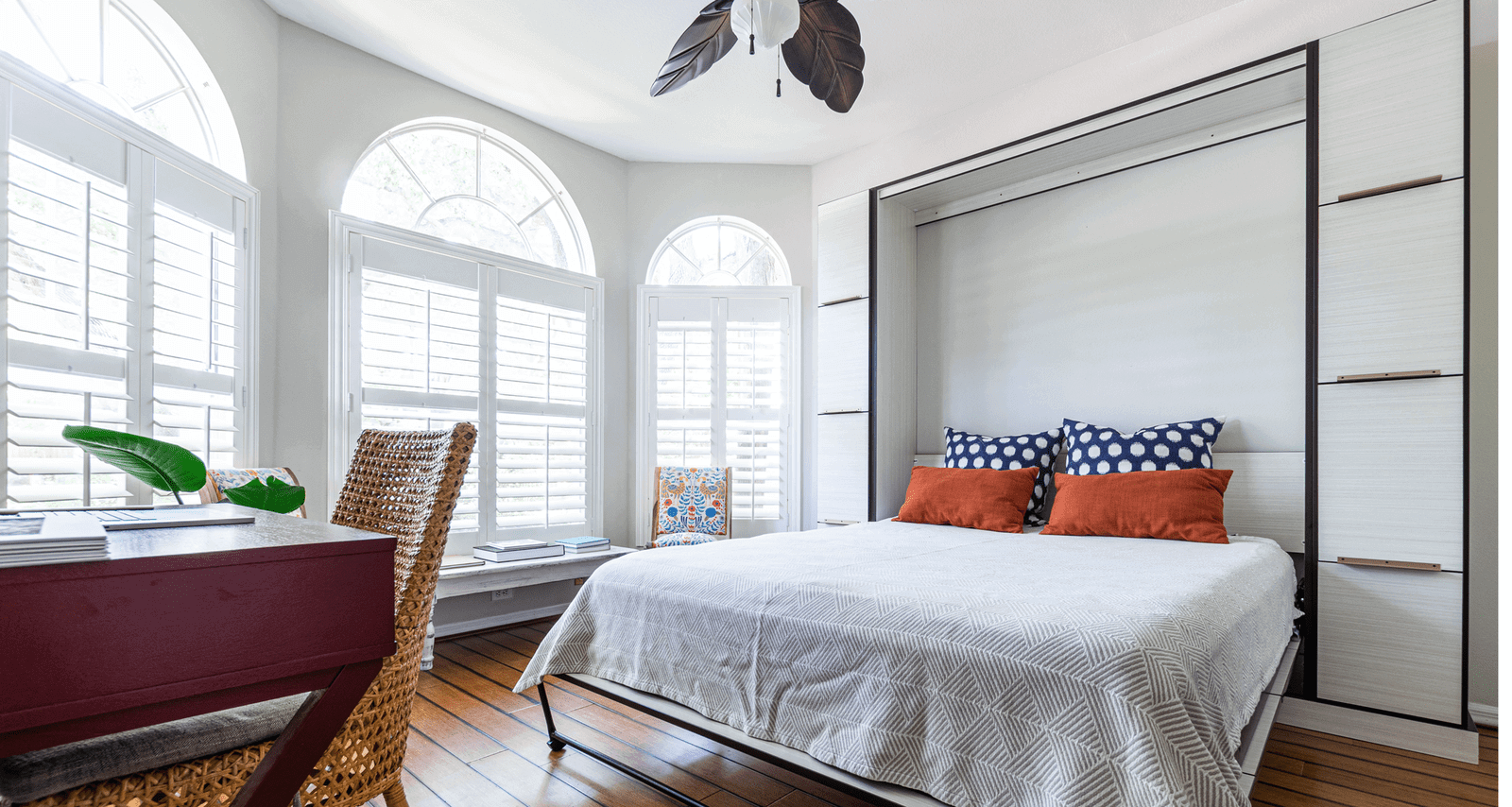
Worth noting: Create-A-Bed's Bed + Desk Bundle takes this further — a fold-down work surface integrates with the Murphy bed mechanism in a single vertical footprint. Office by day, guest room by night. If dual-use is the goal, this is ideal. |
Cost: The Number That Surprises Most People
The assumption most people bring to this comparison is that Murphy beds are significantly more expensive than sofa beds. That can be true for pre-built Murphy bed furniture from retail or custom cabinetry shops, which can run $2,000 to $5,000 or more. It's not true for the DIY kit route.
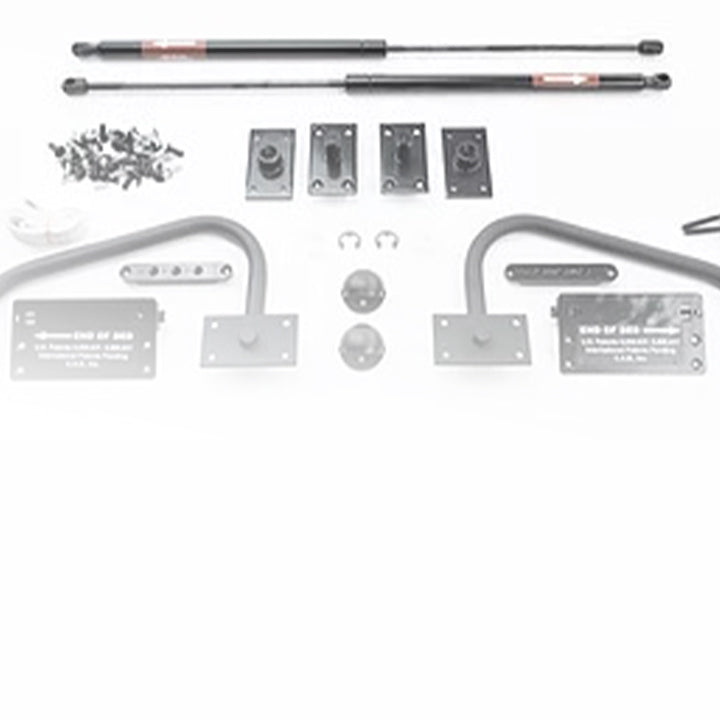
Create-A-Bed mechanism kits start at $279 for the Standard and run to $399 for the Premium Adjustable. According to Create-A-Bed, most builds come in under $1,000 total in materials — mechanism included. Add a mattress on top of that and you’re still at or below the cost of a quality mid-range sofa bed, with a full-depth sleeping surface and a fixture designed to last 15 to 25 years.
|
Murphy Bed — DIY Kit Route |
Sofa Bed |
|---|---|
|
Mechanism kit: $279–$399 |
Entry-level: $800–$1,000 |
|
Lumber & materials: most builds under $1,000 total (mechanism included)* |
Quality mid-range: $1,000–$1,800 |
|
Mattress: additional cost, varies by choice |
Premium (memory foam, no-bar): $3,000–$4,000+ |
|
Total all-in: under $1,000 in materials + mattress* |
Total all-in: Up to $4,000+ |
* Materials cost figure sourced from Create-A-Bed FAQ. Actual costs vary by size, wood selection, and local lumber prices. Mattress is an additional cost and varies by type and quality.
The other cost variable is longevity. A well-built Murphy bed using quality hardware — Create-A-Bed has been manufacturing our mechanism in the USA since 1985 — is designed for decades of use. Sofa beds, not so much. Over a 20-year horizon, the cost-per-year comparison shifts further in the Murphy bed’s favor.
Installation and Portability
A sofa bed requires nothing but a doorway wide enough to get it through. No wall anchors, no stud finding, no ceiling height measurement, no landlord permission. It arrives, you place it, it works. If you move, it goes with you. For renters, for people who move frequently, or for anyone who doesn't want to commit to modifying a wall, that flexibility is a valuable consideration.
A Murphy bed is a permanent installation. It anchors to wall studs, it stays when you leave, and it requires time spent to build it upfront. For landlords or Airbnb hosts, a Murphy bed is exactly the kind of touch that could raise the desirability of the home. For anyone not comfortable with basic construction, it may mean hiring help for the building and installation portion.
Which Situation Are You In?
The case for and against each option shifts depending on what the room actually needs to do. Here's how the decision lands across three common scenarios.
Setting Up a Guest Room for Family and Friends
If the room is a dedicated guest room, the sofa bed's permanent seating function is mostly wasted — you don't need a couch in a guest room, you need a bed. A Murphy bed gives you a proper sleeping surface and returns the room to usable space between visits. That spare bedroom that gets used five nights a year fully becomes an office, a workout room, or a reading space the other 360 days.
The sleep quality argument also matters more here than people tend to acknowledge. Guests notice mattress quality as they toss and turn at night and when they nurse their new aches in the morning. The difference between sleeping on a real bed and sleeping on a 4-inch fold-out is the difference between feeling like they stayed somewhere and feeling like they crashed somewhere. It's worth giving them an actual bed.
The sofa bed makes sense in this scenario only if you genuinely need seating in that room and you're comfortable with the sleep quality trade-off for infrequent guests. One or two nights a year, an occasional visitor can sleep on a decent sofa bed without it being a problem. A week-long stay is likely to be a different calculation.
Running or Planning a Short-Term Rental
For Airbnb and short-term rental hosts, the argument for a Murphy bed runs through three things: sleep quality, room versatility, and durability.
Guests leave reviews that mention the bed. A real mattress is an asset that shows up in five-star comments; a pull-out sofa is a liability that shows up in three-star ones. A room with a Murphy bed can also be positioned differently in the listing — as a workspace that converts to a guest room, which expands your pool to include solo travelers, remote workers, and longer-stay guests who need the room to function during the day.
Durability is the less obvious factor. Create-A-Bed's mechanism hardware is engineered for long-term, high-cycle use — it's built for the kind of frequency a rental property generates. Sofa bed pull-out mechanisms are consumer furniture designed for occasional use. For a property with guests checking in and out multiple times a week, that engineering difference compounds over time.
Selling or Staging a Home
A Murphy bed in a flex room tells a buyer that the space is genuinely flexible. Closed, it photographs as an office or den. Open, it's a guest bedroom. The room serves two purposes in the listing photos without either one looking like a compromise. A sofa bed can’t give the same effect; you would seem to be showing off a sofa bed, not a room.
Buyers looking at bonus rooms, finished basements, or rooms without closets respond to demonstrated flexibility. A Murphy bed makes the case visually. It also stays with the house — a built-in fixture rather than furniture to negotiate over — which positions it as a feature rather than a possession. For sellers trying to display a flex room as a functional living space, a Murphy bed is a more persuasive display.
Frequently Asked Questions
General
Can I use any mattress in a Murphy bed?
Many, but not quite any. Create-A-Bed mechanisms support mattresses up to 12 inches thick and within a specific weight range — typically 65 to 80 pounds depending on the mechanism tier — so the pistons balance correctly. If you buy one of our Adjustable or Premium Adjustable mechanism kits, the precise balancing can be adjusted easily at any time. Memory foam and hybrid mattresses work well because they're flexible enough to handle vertical storage without damage. Pillow-top mattresses are generally excluded; the extra loft pushes past the cabinet's depth capacity. When in doubt, call Create-A-Bed before buying the mattress — we’re happy to discuss the compatibility of your potential mattress choices.
How long does a Murphy bed last compared to a sofa bed?
A well-built Murphy bed with quality hardware is designed for decades of daily use. The mechanism is the key component, and Create-A-Bed has been building ours from high-strength American steel since 1985. Sofa beds can be expected to have a lifespan of 5 to 10 years of intermittent, not daily, use. Over a 15-year window, a Murphy bed built from a $350 kit outperforms multiple sofa bed replacements on both cost and sleep quality.
Does a Murphy bed require professional installation?
Not necessarily. Create-A-Bed kits are designed for DIY construction with detailed instruction sets for each size and orientation. The build is within reach of anyone with basic woodworking skills and standard tools. If that is not you, we can help connect you with a woodworking professional who can build and install the bed for you.
Guest Room / Homeowner
Is a Murphy bed comfortable enough for guests who stay regularly?
Yes — because the comfort depends entirely on the mattress you install, not on the mechanism. Put in a quality memory foam or hybrid mattress and guests sleep on a quality memory foam or hybrid mattress. There's no bar, no fold point, no structural limitations as there would be in a sofa bed. The only adjustment guests need to make is pulling the bed down and putting it back up, which takes under a minute and is intuitive enough that a note on the cabinet door handles the explanation.
What size Murphy bed makes sense for a spare room?
Queen is the most practical choice for a dedicated guest room — it fits two people comfortably, accepts standard queen bedding, and works on most typical spare room wall configurations. Twin is appropriate for a child's room or a room that primarily hosts solo guests. Full is a reasonable middle ground where wall space is tighter.
Airbnb / Short-Term Rental
Will guests know how to use a Murphy bed?
Most guests have seen one before, and the mechanism is intuitive. A brief note in your house manual or a laminated card on the cabinet door — two steps, release the latch and lower the bed — is all hosts should need to include. Create-A-Bed's piston-assisted mechanism is designed to be easy to operate; the bed comes down and goes back up safely and with minimal effort. Guest confusion is rarely a complaint in rental reviews for Murphy beds.
Is a Murphy bed durable enough for frequent guest turnover?
It's more durable than a sofa bed for exactly that use case. Create-A-Bed's mechanism is engineered for long-term, high-cycle use — the kind of frequency a busy rental property generates. Sofa bed pull-out mechanisms are consumer furniture meant for intermittent use. For a property with guests checking in and out multiple times a week, the difference in engineering and intention matters. A sofa bed's weakest component is the fold-out hardware; a Murphy bed's mechanism is its strongest.
Home Sale / Staging
Does a Murphy bed add value to a home?
It adds demonstrated flexibility, which influences buyer perception and willingness to pay — particularly for flex rooms that can't be listed as bedrooms. A Murphy bed makes the case visually that the space functions as a real bedroom when needed. Whether it affects appraised value depends on the market and the appraiser, but its effect on buyer interest is real, especially in smaller homes and condos where room versatility is a selling point.
Should I include the Murphy bed in the home sale or take it with me?
In most cases, leaving it is the stronger move. A Murphy bed built into cabinetry is intuitively understood as a fixture — part of the home — and buyers may expect it to convey with the sale. Removing it leaves a wall that now needs work and removes a feature from the listing. If you intend to take it, clarify that upfront. If the mechanism is from Create-A-Bed and the cabinet is well-built, it's a genuine asset to increase the value of the home.
The Bottom Line
A sofa bed is a reasonable piece of furniture making a deliberate trade-off: it gives you permanent seating and occasional sleeping capacity in exchange for a compromised sleep experience and a fixed room identity. If you need a couch in that room anyway and your guests are sleeping there only once or twice a year, that trade-off is entirely defensible.
A Murphy bed doesn't make that trade-off. It's an uncompromising bed that disappears when you don't need it — leaving the room open to be whatever else you or your guests want it to be during the day. The sleep quality is determined by the mattress you choose, not by the constraints of a fold-out mechanism. And at equivalent price points, that means a Murphy bed consistently delivers a better night's sleep than a sofa bed at the same cost.
If the room needs to stay flexible — for guests, for renters, for buyers, or just for your own use during the day — the Murphy bed is the option that delivers both without asking you to choose which you value more.
Ready to build?
Most Create-A-Bed builds come in under $1,000 in materials, including the mechanism kit. Pick your size, the orientation, and buy your kit today!
(If you need the room to pull double duty as an office, the Bed + Desk Bundle was built for exactly that.)