




In so many homes, there’s a room that doesn’t quite earn its place on the listing. It shows up on the floor plan as a “bonus room” or “flex space” — a label that real estate agents use when a room technically exists but can’t be called a bedroom. Buyers see it and wonder what they’re supposed to do with it. And if the room is on the small side, the usual solutions make the problem worse, not better.
Put a permanent bed in a 120 square foot room and you’ve solved exactly one problem while creating several others. The new issue is that the bed in the bedroom eats most of the room. The room stops photographing well. Buyers walk in and see a space that’s been crowded into a single purpose — and poorly, at that. The room that was supposed to justify its place on the listing now makes the house feel tighter than it is.
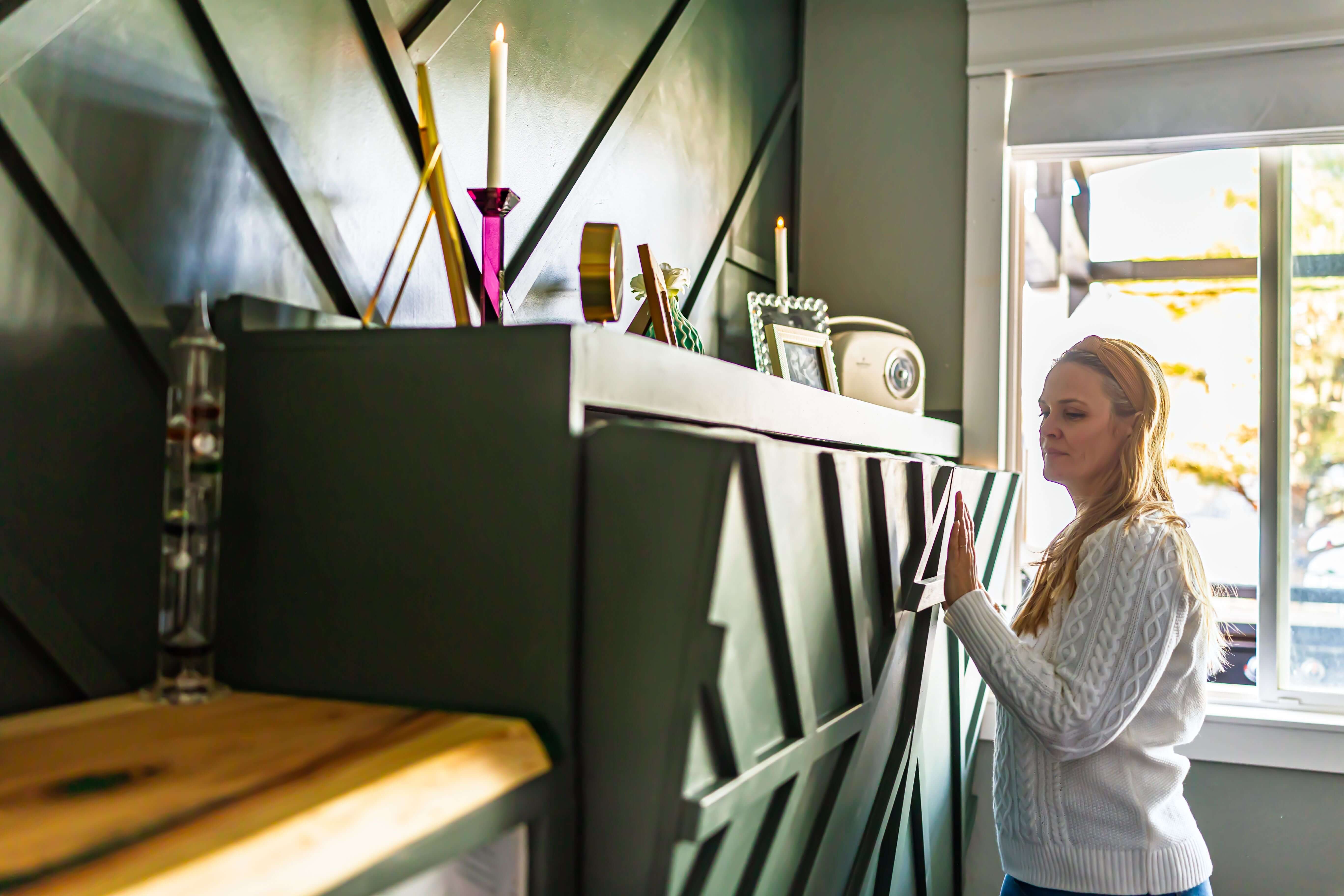
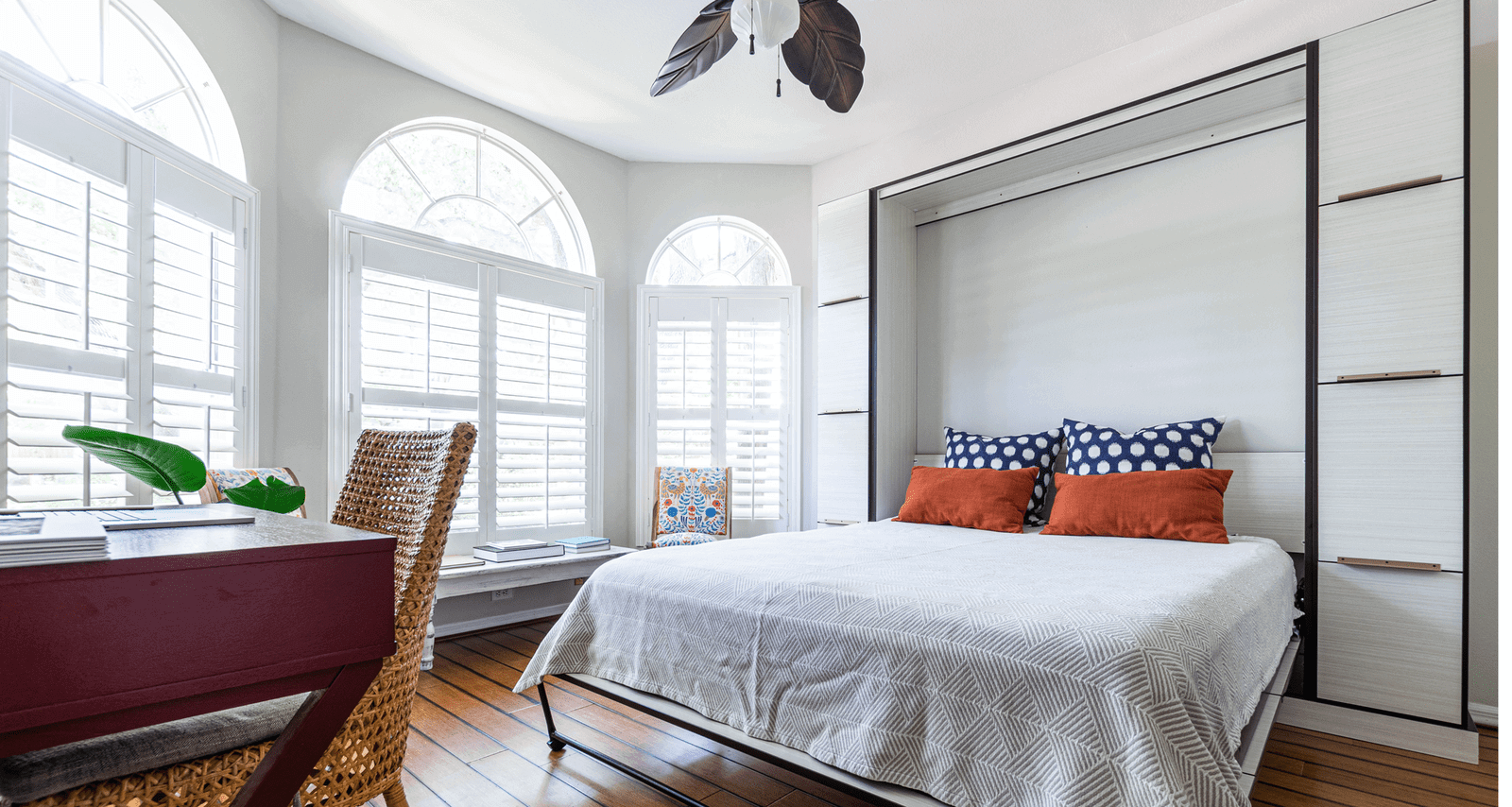
A Murphy bed solves this in a way nothing else does. Closed, the room is open and functional — it can look like an office, a gym, a reading room, whatever stages best for the listing. Open, it’s an actual bed with an actual mattress, demonstrating real bedroom potential. Buyers don’t have to imagine it as a bedroom. They can see it. And when the showing is over, the bed disappears and the room goes back to being true flex space.
For a house flipper, it’s more than a furniture choice. It’s a solid listing strategy.
The Problem with Putting a Permanent Bed in a Small Room
Most bonus rooms land in a range of 100 to 140 square feet. That’s enough space to function well as an office, a gym, or a dedicated guest room — as long as the furniture doesn’t fight the floor plan. A permanent bed doesn’t give you that flexibility. It commits the room to one identity and makes that small room feel crowded.
Here’s why: A full-size bed — 54 inches wide, 75 inches long — occupies roughly 28 square feet of floor space. A queen takes 33 square feet. In a 120 square foot room, that’s more than a quarter of the total floor before you’ve accounted for a nightstand, walking clearance, or a dresser.
The listing problem is just as real as the floor space problem. A small room staged with a bed pushed to the wall signals “cramped” to buyers before they’ve visited the property. They mentally file it as the smallest bedroom and start calculating whether their family actually fits in the house. A room that should have been an asset becomes a negative on the pros and cons list.
The obvious alternative — skipping the bed entirely and staging the room as an office or a gym — trades one problem for another. The room looks better in photos. But now buyers have to take your word for it that it functions as a bedroom, and it still doesn’t look big, because it isn’t. The “flex space” label can be overused, and buyers know it. They’ve seen it used to describe rooms that don’t really work as anything.
The room doesn’t just feel small — it is small, in a way that photography can’t fix. Wide-angle lenses and good lighting can make a lot of rooms look bigger than they are. They can’t make a bed disappear.
But we can.
The Murphy bed eliminates that ambiguity. It shows that the room works as a living space with the bed closed and as a proper bedroom with the bed open. You’re not asking buyers to imagine anything — you’re showing them the answer.
What a Murphy Bed Actually Does to the Room
A Murphy bed cabinet sits roughly 16 inches deep against the wall. Closed, that’s the entire footprint — a built-in unit that reads as cabinetry, a wardrobe, or a feature wall depending on how it’s finished. The rest of the floor is completely open. In a 120 square foot room, that means somewhere between 100 and 110 usable square feet of open floor space every time the bed is closed. That’s a room that can be staged well.
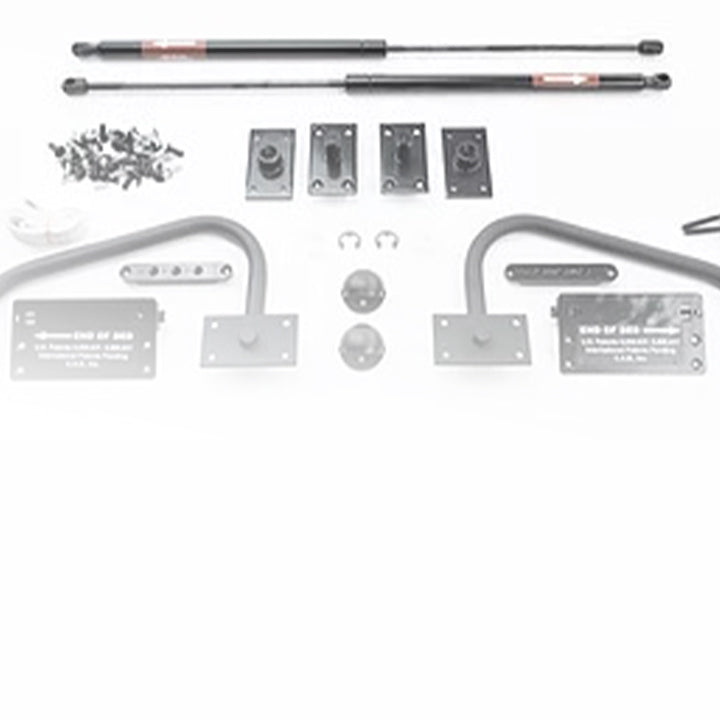
Open, a Murphy bed is a real bed with a real mattress. Create-A-Bed’s mechanism supports mattresses up to 12 inches thick — memory foam, hybrid, innerspring, whatever you choose to put in it. There’s no fold-out mechanism, no bar across the middle, no mattress that’s been folded in half to fit inside a sofa frame. It’s a bed that performs like a bed because it is a bed, not a couch with a sleeping function tacked on.
For a buyer walking through a showing, the combination of those two states is the entire pitch. Open the bed for the walkthrough and the room’s sleeping possibilities are immediately obvious and credible. The mattress is full depth, the headboard is properly detailed, the bed fills the room the way a real bedroom should. Then close it, and the room transforms. That thirty-second demonstration is more persuasive than a floor plan note or a listing description could ever be. Buyers see what they’re getting.
|
A note on listing photos: Shoot the room both ways. A photo with the bed closed — well-lit, styled as a workspace — and a second photo with the bed open and made up shows buyers the full range of the room without any explanation required. The contrast between the two images does the selling. Use both. |
Choosing the Right Size and Orientation for a Small Room
Not every Murphy bed works in every small room. The two variables that matter most are the available wall width and room depth, and the finished cabinet dimensions need to be matched against the specific room before anything is ordered.
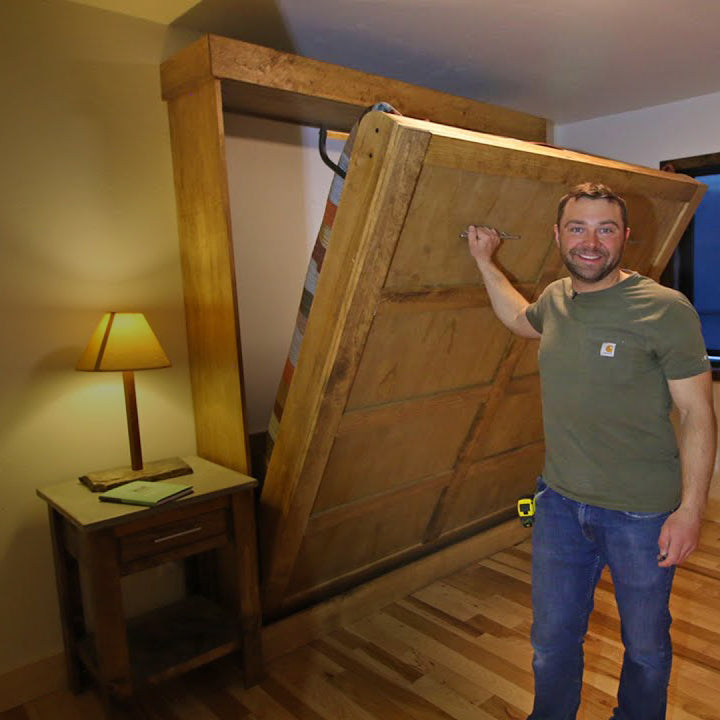
Room depth requirements are a variable that’s easy to underestimate. A Murphy bed projects into the room when it’s open. A vertical queen projects 87 inches from the wall when open. In a room that’s only 10 feet deep, that leaves 33 inches of clearance between the foot of the bed and the opposite wall. That’s technically functional but it feels very cramped rather than comfortable.
The orientation choice — vertical versus horizontal — affects both the cabinet footprint and the room projection. Vertical cabinets are taller and narrower; horizontal cabinets are shorter and wider. For small bonus rooms, a few specific combinations tend to work well:
-
Vertical twin: Cabinet is just under 45 inches wide and 82 inches tall or long — the narrowest footprint in the lineup and a natural fit for walls that don’t have a lot of horizontal run. Projects 83 inches into the room when open. Works in rooms that are at least 10 feet deep with some clearance to spare.
-
Vertical full: Widens to just under 60 inches but stays at the same 82-inch height. Better for rooms with a longer wall available. Same 83-inch projection as the twin.
-
Horizontal twin: The lowest projection option in the entire lineup — only 46 inches from the wall when open. Trades some wall width (needs about 81 inches) for dramatically reduced room projection. Strong choice for rooms that aren’t very deep.
-
Horizontal full: Projects 61 inches and needs the same wall width as the horizontal twin. A full-size bed in a horizontal cabinet is a solid offering for a small bonus room where wall depth is tighter.
Finished cabinet dimensions for small-room configurations:
|
Size & Orientation |
Cabinet Height |
Cabinet Width |
Room Projection |
|---|---|---|---|
|
Twin (vertical) |
82-1/8" |
44-7/8" |
83" |
|
Full (vertical) |
82-1/8" |
59-7/8" |
83" |
|
Twin (horizontal) |
47-3/8" |
80-7/8" |
46" |
|
Full (horizontal) |
62-7/16" |
80-7/8" |
61" |
|
Queen (horizontal) |
68-7/16" |
85-7/8" |
67" |
Queen horizontal is worth including for rooms that can accommodate it — it projects 67 inches and needs just under 86 inches of wall width — but for genuinely small rooms it tends to push through the boundaries of what feels comfortable into what feels cramped. Make sure of the dimensions of the actual room and comparing with your different bed size options before committing to a size.
One practical note on wall width: the horizontal configurations need a clean, uninterrupted run of wall. A window, doorway, or outlet interrupting an 86-inch span means horizontal won’t work at queen size. Vertical configurations are more tolerant of room quirks because the narrower cabinet is easier to find a clear wall section you can use.
The “Already Solved” Factor
There’s a specific kind of value in handing buyers a problem they didn’t have to solve themselves. A Murphy bed in a small bonus room does exactly that.
Buyers who walk into a room and see a Murphy bed installed don’t have to wonder whether the room works as a bedroom. They don’t have to research Murphy beds, find a contractor, figure out what size makes sense, confirm the wall can handle anchoring, or do any of the work the seller already did. The solution is present, functioning, and demonstrated right there during the showing. That removes a decision from their plate and replaces it with confidence and potentially excitement about a truly flexible (and visually attractive) space.
This matters more in a small room than anywhere else. A small room with no solution already in place puts the problem in the buyer’s court — they have to figure out why they would want to buy that room, and how to make it work. A small room with a Murphy bed already installed takes that problem off the table entirely. In a competitive listing environment, that kind of differentiation helps.
The Cost
Fortunately, a Murphy bed is not a major renovation. Create-A-Bed mechanism kits start at $279. In our experience, most builds come in under $1,000 in total materials — mechanism included.
Converting existing square footage almost always delivers better ROI than building new. Construction costs for a new bedroom addition run from $30,000 to $80,000 or more depending on scope. Reconfiguring existing flex space typically costs a fraction of that and consistently returns a higher percentage of the investment at resale because the cost baseline is so low.
The value argument is most straightforward when the Murphy bed changes how the room can be listed. A room that moves from “bonus room” to credible bedroom is a room that expands the buyer pool. Whether that translates directly into an appraised value adjustment depends on the local market — the jump from two to three bedrooms moves the needle more consistently than three to four — but the listing appeal argument holds regardless. More buyers can see themselves using the home if the room count is clear.
Under $1,000 in materials and a some hours of build time to prove and improve the function of a room that was otherwise a liability on the listing. That math works.
The Bottom Line
A small bonus room is a solved problem or an open question, and buyers can tell the difference within thirty seconds of walking in. A permanent bed makes the room feel smaller and only demonstrates that using the room permanently as a bedroom is unappealing. A Murphy bed, on the other hand, gives the room open floor when you don’t need a bed, proper sleeping space when you do, and lets buyers see both during the showing.
For a house flipper, that’s the argument. You’re not just installing a bed. You’re removing a question from the buyer’s list and replacing it with a demonstrated answer. In a listing environment where buyers are making fast decisions based on photos and a single walkthrough, that clarity has real value.
|
Ready to order? Create-A-Bed mechanism kits start at $279 and come with free plans and instructions for every size and orientation. If you’re sizing a kit to a specific room, the dimensions on the Plans & Instructions page give you the exact finished cabinet footprint — no approximations. USA-made hardware, available support, no guesswork. |
Not ready to buy? Give us a call and we’d love to answer your questions!